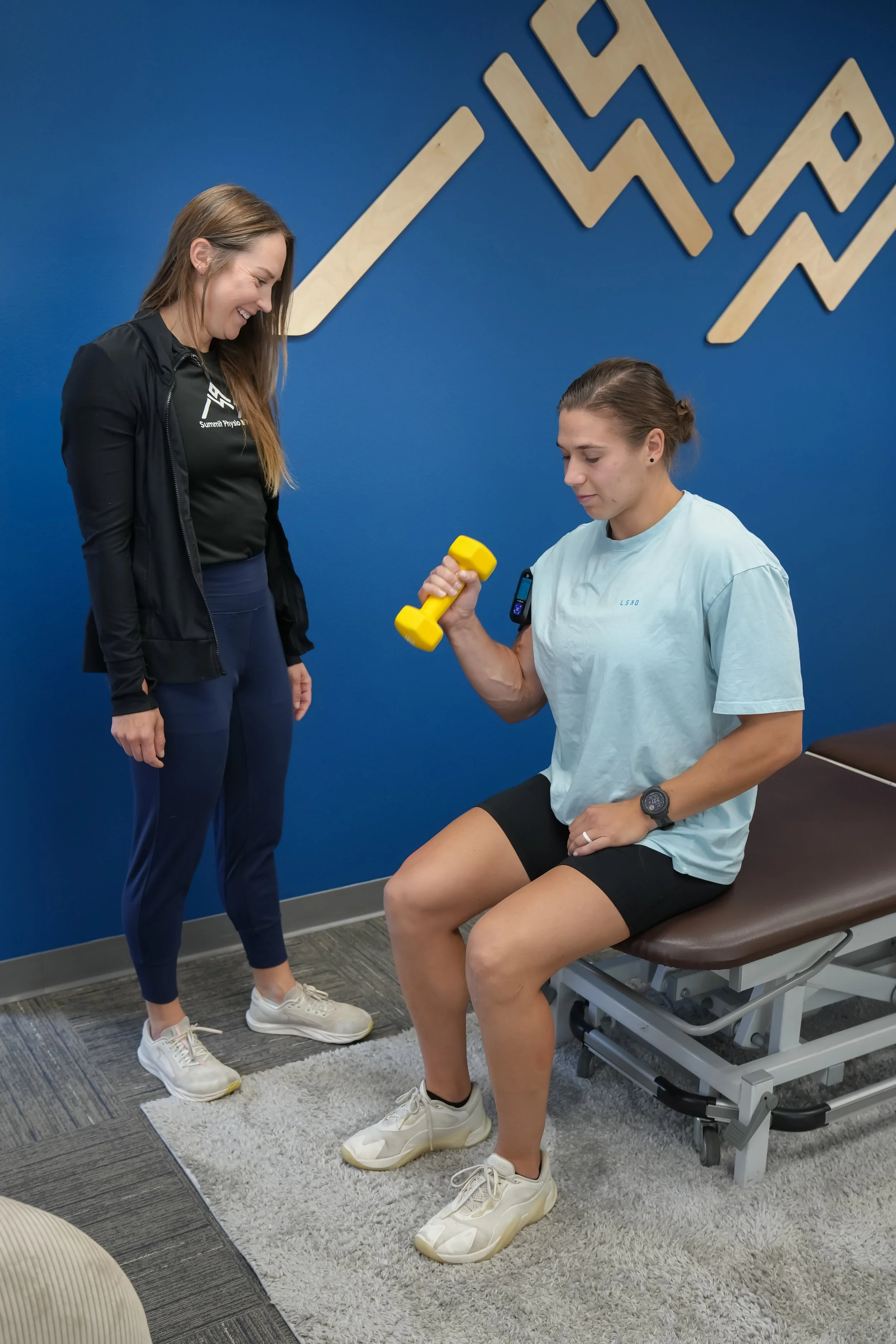
Blood Flow Restriction Training (BFR Therapy) in Colorado Springs
Build strength and muscle with lighter loads while protecting healing tissues and joints
What is Blood Flow Restriction Training?
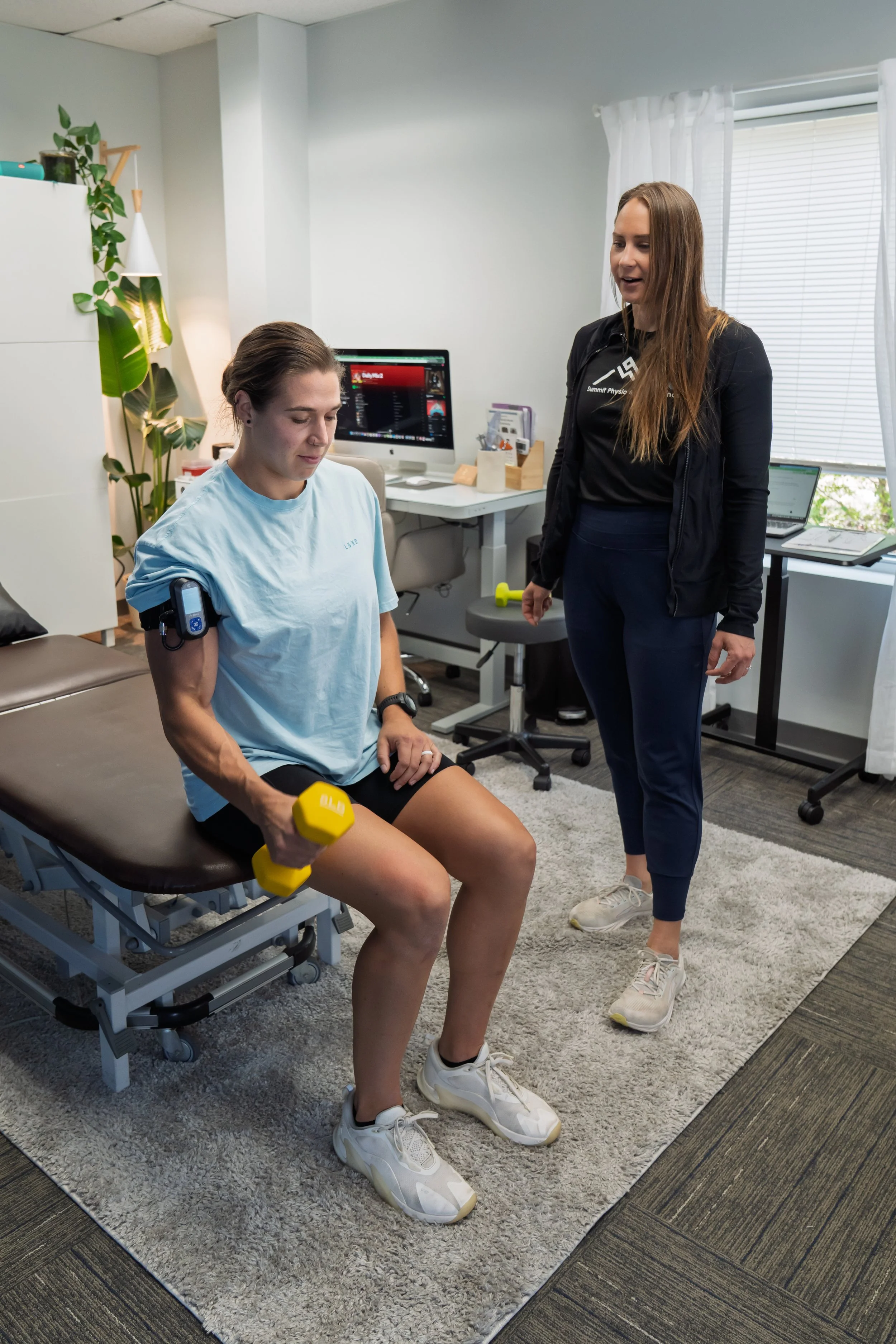
Blood Flow Restriction (BFR) training is a safe technique where we use specialized cuffs to gently limit blood flow while you exercise. This makes your muscles work harder, even with very light weights when you are less able to tolerate load with pain.
At Summit Physio & Performance, we use FDA-approved BFR devices from FitCuffs to help you build strength and muscle without putting extra stress on your joints, tendons, or healing tissues. Whether you’re recovering from surgery, coming back from injury, or looking for a new way to boost performance, BFR can help you get stronger and recover faster.
How BFR Training Works
-
By limiting venous blood flow (blood flow that returns to your heart) while you exercise, BFR tricks your muscles into thinking they’re working much harder than they actually are. This leads to powerful benefits, even with light weights:
Faster muscle growth and hypertrophy from the buildup of natural byproducts in your muscles
Boosted hormone response that supports strength and recovery
More muscle fibers activated, even when lifting light
-
At the cellular level, BFR training creates conditions that encourage faster muscle repair and strength gains, even with lighter loads.
Who Benefits from BFR Training?
-
Maintain and build muscle mass when traditional loading is contraindicated. Perfect for ACL reconstruction, meniscus repair, rotator cuff surgery, and joint replacements.
-
Continue training unaffected areas while protecting injured tissues. Maintain fitness and strength during recovery periods.
-
Build strength and muscle mass with joint-friendly loads. Combat age-related muscle loss without heavy weights.
-
Anyone who cannot tolerate heavy loads due to pain, arthritis, or other conditions.
Safety & Screening
Before beginning BFR training, we thoroughly assess for any contraindications or precautions. Safety is our top priority.
Assess risk factors & contraindications
Precautions:
Arterial calcification
Tumor
Renal compromise
Abnormal clotting time/blood clotting disorder
General infection
Acid-base imbalance
Diabetes
Hypertension
Atherosclerotic vessels
Sickle cell traits
Cardiopulmonary conditions
Pregnancy
Meds:
Screen for anti-hypertensives
Contraindications:
Short restriction time or deflate between sets (Intermittent BFR)
Measure LOP/AOP & use low pressure (40-50% LOP)
Physician Approval for BFR
Assess Pressure (mmHg) During Exercises
Be aware of dizziness, numbness, discomfort, etc.
Possible contraindications for tourniquet use include:
Venous thromboembolism/ACTIVE DVT
Impaired circulation or peripheral vascular compromise
Previous revascularization of the extremity
Extremities with dialysis access
Acidosis
Sickle cell anemia
Extremity infection
Tumor distal to the tourniquet
Medications and supplements known to increase clotting risk
Open fracture
Increased intracranial pressure
Open soft tissue injuries
Post-traumatic lengthy hand reconstructions
Severe crushing injuries
Severe hypertension
Elbow surgery (where there is
Concomitant excess swelling)
Skin grafts in which all bleeding points must be readily distinguished
Secondary or delayed procedures after immobilization
Vascular grafting
Lymphectomies
Cancer
What to Expect During BFR Training
-
Medical history review and screening
Limb Occlusion Pressure (LOP) testing
Establishing your personalized pressure settings
Education on the technique and expectations
-
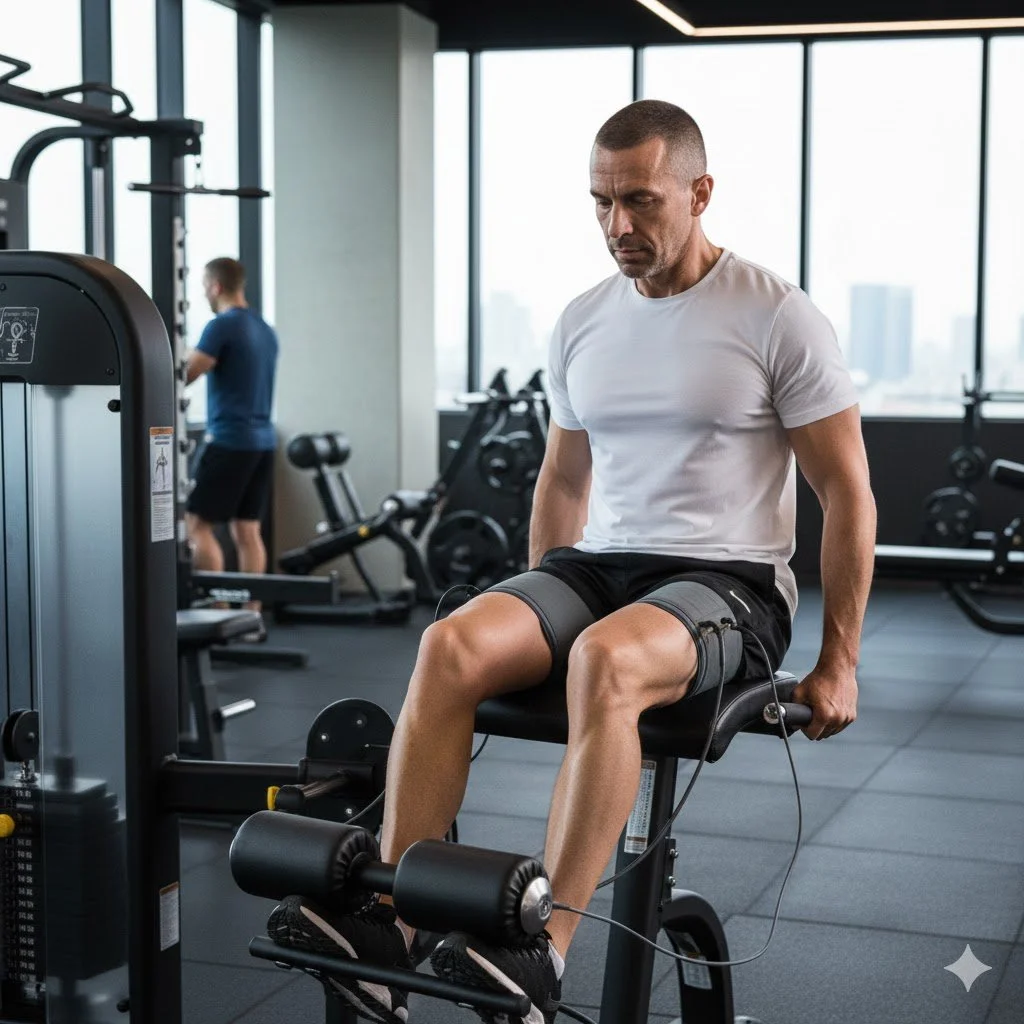
Lower Body: As high as possible in the hip crease
Upper Body: Just below the shoulder joint
Proper placement is crucial for effectiveness and comfort
Often we will occlude both limbs for maximum benefit if both BFR devices are available
-
You'll feel muscle burn and fatigue similar to heavy training
Some people experience temporary numbness or tingling
The "pump" sensation will be more intense than normal training
We continuously monitor your response and comfort
-
Immediate cuff deflation after exercise completion
Normal post-exercise soreness expected
Most people report feeling less joint stress than traditional training
Frequently Asked Questions
Is BFR training safe?
When performed by trained professionals with proper equipment and screening, BFR is very safe. Adverse effects are rare, and we take extensive precautions including individualized pressure testing and continuous monitoring
Does it hurt?
You'll feel an intense muscle burn and fatigue similar to high-intensity training, but joint pain is typically minimal. The cuff pressure should feel snug but not painful.
Can I do BFR on my own?
We combine cuptherapy with movement and integrate it with other manual and other therapeutic techniques. This active approach produces superior results compared to static cupping alone.
How does BFR compare to regular weight training?
Research shows BFR with light weights (20-30% 1RM) can produce similar strength and muscle gains as traditional heavy training (65-85% 1RM) but with less joint stress and faster recovery.
Can both limbs be trained simultaneously?
Yes, when appropriate and with available equipment, training both limbs can maximize benefits and save time.
The Summit Physio Difference
Precision Pressure Testing
We always measure your individual Limb Occlusion Pressure (LOP) to ensure safe and effective training pressures. This personalized approach maximizes results while maintaining safety.
Progressive Programming
Our Doctors design progressive BFR programs that evolve with your recovery
Highly Rated on Google
Ready to Accelerate Your Recovery?
Experience the revolutionary benefits of Blood Flow Restriction training. Our expert team will design a personalized BFR program to help you achieve your goals safely and efficiently.