Running & Gait Retraining in Colorado Springs
Run pain-free, improve efficiency, and reduce your risk of injury with expert movement analysis and technique coaching.
What is Running & Gait Retraining?
At Summit Physio & Performance, we take running seriously. Our gait retraining sessions go beyond simple movement observations to deliver a personalized, biomechanically sound plan to help you move better and feel better.
Whether you're a competitive runner, recreational jogger, or just getting back into movement, our goal is to assess and improve how your body loads, absorbs shock, and transfers energy during running. This leads to reduced injury risk, better performance, and a more enjoyable running experience.
This isn’t just for elite athletes. Gait retraining is one of the most effective ways to reduce recurring injuries, especially for:
Runners with knee, hip, back, or ankle/foot pain
Anyone returning to running post-injury or postpartum
Athletes looking to improve stride efficiency and endurance
Why Gait Mechanics Matter
Most running injuries are not caused by the run itself, but by inefficient movement patterns that overload joints and tissues over time. Running is essentially repetitive single leg, sagittal plane movements and we must factor in volume that one will accumulate with their running form. Our clinicians are trained in movement science and gait biomechanics to:
Identify and correct dysfunctional stride patterns
Address strength or mobility deficits that affect form
Improve cadence, footstrike, and energy transfer
Reduce impact forces and asymmetries that lead to injury
Implement running retraining for offloading or correcting mechanics when necessary
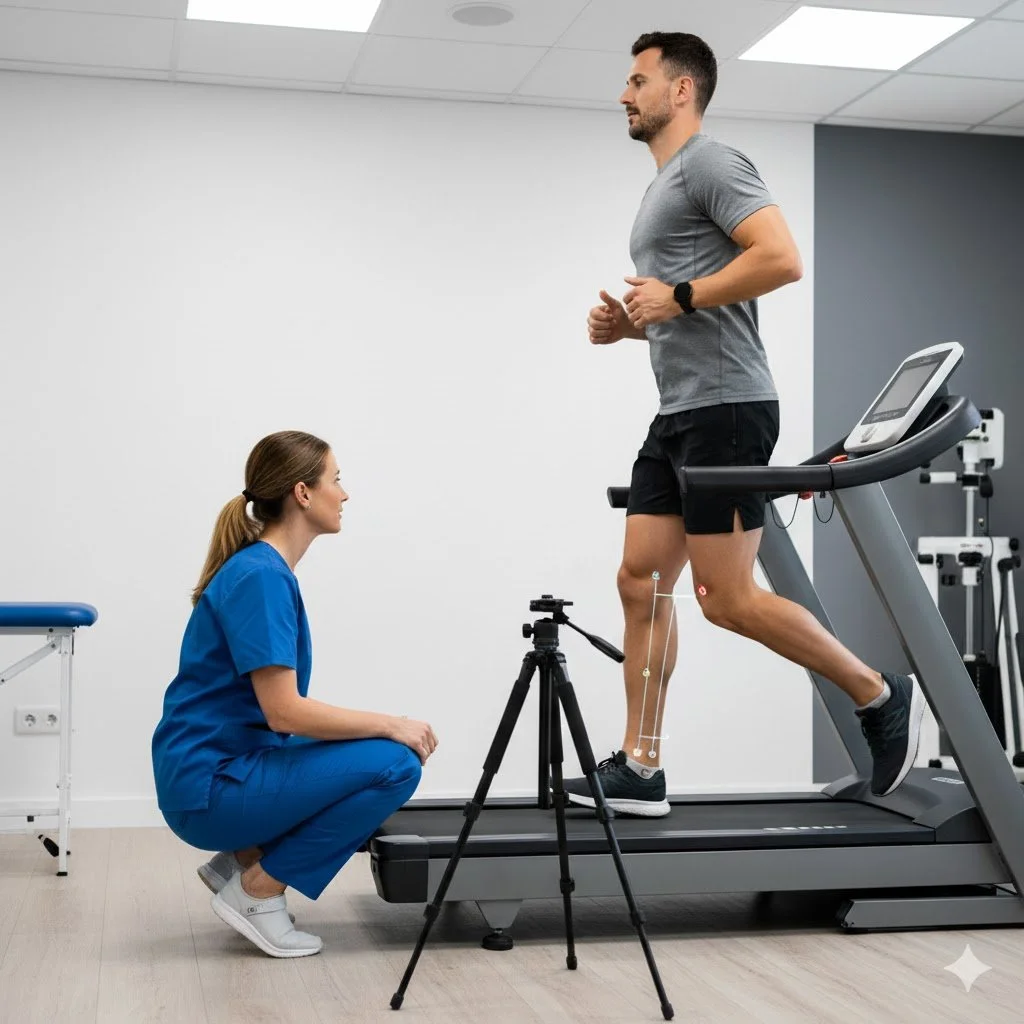
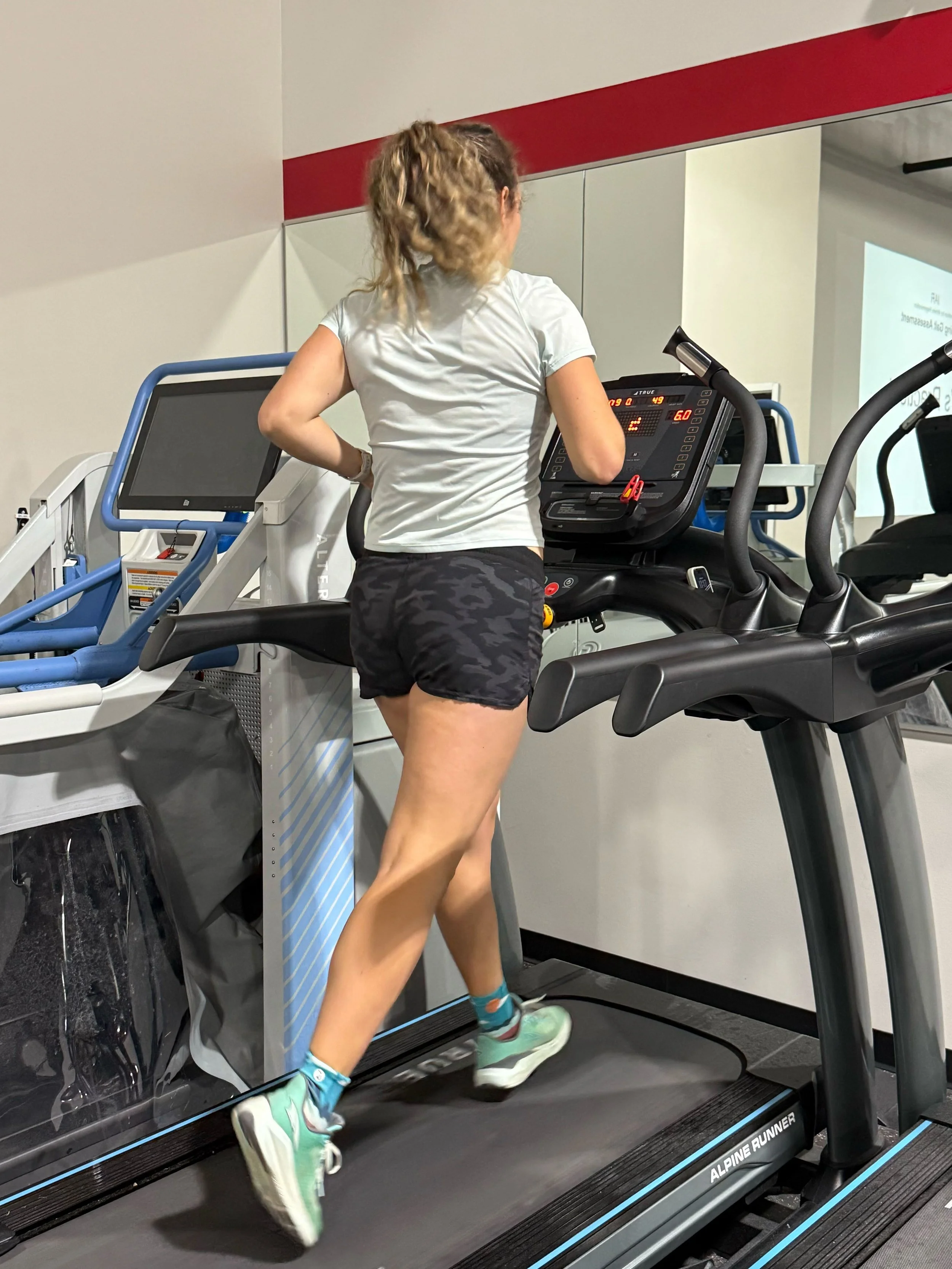
By analyzing your running frame-by-frame, in both front and side views, we can pinpoint the breakdowns in your stride and help you rebuild smarter patterns. We may also assess your cadence which is the number of steps you take/minute to determine efficiency in step rate.
What to Expect in a Running & Gait Session
1. Movement + Strength Assessment
We begin by assessing your flexibility, joint mobility, strength, and movement control. This helps identify limitations that affect your running mechanics.
2. Video Gait Analysis
We capture your run from multiple angles and slow it down to break down your movement frame-by-frame.
3. Cadence Assessment
We will count the number of steps you take on one leg in a 30 sec window in order to determine your cadence, the number of steps you take per minute. It measures how quickly runners' feet strike the ground. Higher cadence can improve running efficiency by reducing the time spent in the air between steps and optimizing cadence and enhance the impact on joints and play a role in injury risk.
4. Technique Coaching
We use verbal, visual, and tactile cues to guide changes in your running mechanics. You’ll receive individualized coaching focused on optimizing your unique stride.
5. Programming for Progress
You'll leave with a plan, often including mobility work, drills, strength progressions, and cues in order to reinforce changes and track your progress over time.
Who Benefits from Running & Gait Retraining?
-
Improve efficiency, prevent overuse injuries, and improve pacing.
-
Enhance explosive stride mechanics and force output.
-
Improve endurance and recovery between events.
-
Return safely after stress fractures, tendon issues, or surgery.
-
Build great form from the beginning to avoid problems down the road.
-
Improve run mechanics for hybrid-style competitions.
Common Running Myths (Debunked)
Hip drop/ankle pronation/knee valgus/LLD cause injuries
Heel striking causes injuries
Stretching right before a workout is injury prevention
Getting stronger directly prevents injuries
Support/motion control shoes match arch height to prevent injuries