
The Metabolism Myth: Does Your Metabolism Really Slow Down With Age?
You've probably heard that your metabolism starts slowing down as you get older. Maybe you've even noticed that maintaining the same body composition seems to require more effort than it did in your 20s. It's an easy conclusion to make: my metabolism must be slowing down. But how accurate is that explanation?
In 2021, researchers published a landmark study in Science examining how energy expenditure changes across the human lifespan (Pontzer et al., 2021). The findings challenged some long-held assumptions about what actually happens to our metabolism as we age. Before we look at those findings, though, it helps to clarify what we mean by metabolism.
What exactly is Metabolism?
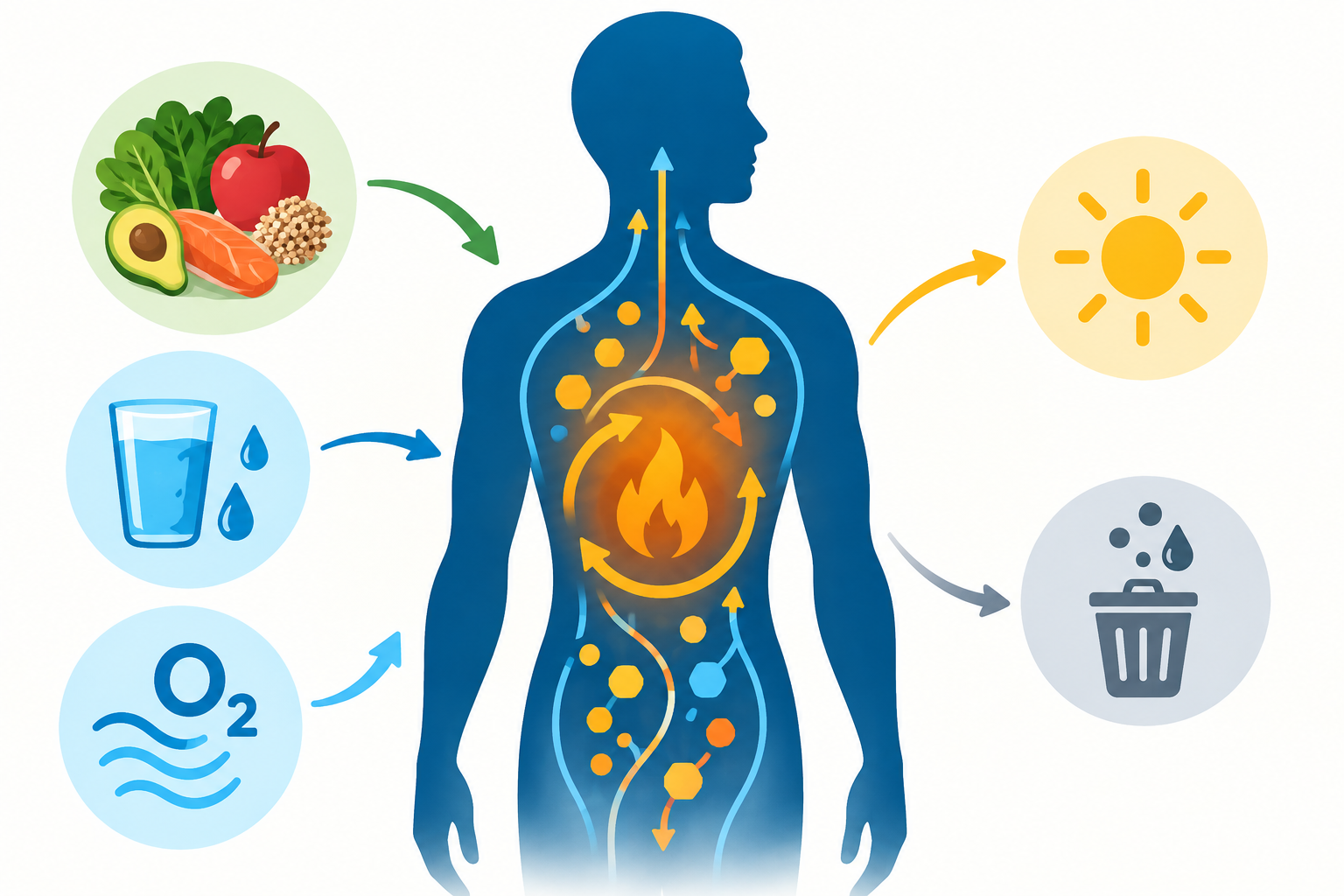
Metabolism is the collection of chemical processes your body uses to convert nutrients into energy and use that energy to maintain, repair, and build tissues and carry out essential functions. It is happening constantly, whether you're sleeping, eating, exercising, or sitting at your desk.
When we talk about how much energy your body uses over the course of a day, we're talking about total daily energy expenditure (TDEE). TDEE can be broken down into three main components:
Basal metabolic rate (BMR): The energy your body requires to maintain basic physiological functions at rest, such as breathing, circulation, and maintaining body temperature.
Thermic effect of food (TEF): The energy your body uses to digest, absorb, and process the food you eat.
Physical activity: The energy you expend through movement. This includes exercise activity, such as lifting or running, as well as non-exercise activity thermogenesis (NEAT), which includes everyday movement like walking, standing, fidgeting, and doing chores.
Together, these components determine how much energy you expend throughout the day. So when someone says, "My metabolism has slowed down," they're assuming their cellular engine is dying down with age.
And in 2021, a massive global study proved that the ‘slowing cellular engine’ is almost entirely a myth.
What the Landmark 2021 Study Revealed
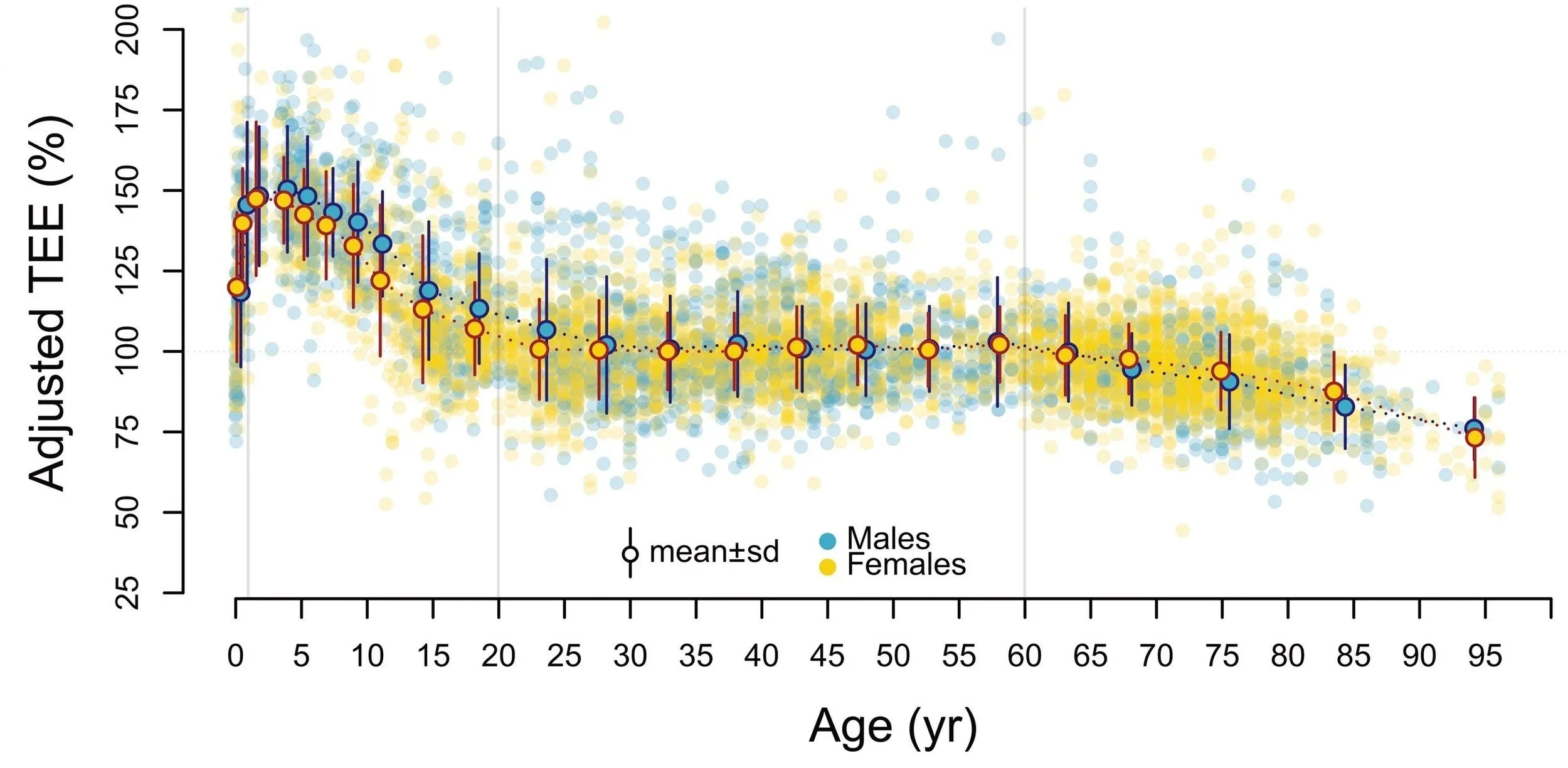
To get an accurate picture of metabolism across a lifetime, Herman Pontzer and an international team of researchers analyzed data from over 6,600 people ranging from 8 days old to 95 years old across 29 countries.
Rather than relying on self-reported food logs or short resting tests, they used doubly labeled water, the gold-standard method for tracking total energy expenditure in free-living humans over extended periods.
When researchers adjusted the data for body size and composition (specifically fat-free mass), they discovered that metabolic rate across a human life doesn't steadily decline. Instead, it moves through four distinct biological phases:
1. Infancy (Birth to Age 1): The Peak
Metabolism skyrockets immediately after birth. Controlled for body size, a one-year-old burns calories at a rate roughly 50% higher than an adult. This reflects the massive biological energy cost of rapid cell division, organ development, and tissue growth.
2. Growth to Adulthood (Ages 1 to 20): The Downward Glide
Metabolic rate gradually declines by about 2.8% per year until it settles into adult baselines around age 20. While teens burn a lot of total calories because they are physically larger, their cell-for-cell metabolic rate is actually sliding down toward adult levels throughout adolescence.
3. The Adult Plateau (Ages 20 to 60): The Absolute Flatline
This is the study's primary myth-buster. Adjusted for fat-free mass (muscle, bone, and organs), metabolic rate remains completely rock-solid through your 20s, 30s, 40s, and 50s. The researchers found no metabolic drop in your 30s, nor did they find a tissue-level metabolic crash linked to pregnancy or menopause. Your cells fire at the exact same baseline rate at 55 as they did at 25.
4. Older Adulthood (Age 60+): The True Slowdown
A genuine, biologically driven slowdown does eventually begin around age 60, dropping at roughly 0.7% per year. By age 90, tissue-level energy expenditure is about 20% lower than in mid-adulthood, —driven by cellular aging and declining organ metabolic activity.
The Takeaways (TL;Dr)
Ages 20-60 is a flat line: Your cell level metabolism does NOT slow down in your 30s, 40s, 50s. Controlled for muscle and body size, it stays rock solid consistent for four decades.
Your metabolic peak was Age 1, not your 20, burning 50% more calories relative to body size than an adult.
The Real slowdown is late and slow: Starts at age 70, declining at just ~0.7% each year.
What This Means for Your Fitness and Body Composition
If reading those three points feels like a punch in the gut, you aren't alone. It forces us to confront a frustrating question: If our cellular -level engine isn't grinding to a halt in our 30s, 40s, and 50s, why does maintaining body composition feel like pushing a boulder uphill compared to our early 20s?”
For active, fitness-forward individuals, the answer almost never lies in a broken cellular system. Instead, it comes down to two major, highly controllable variables:
Changes in Muscle Mass (Fat-Free Mass)
Life gets busier, and for many people, consistent strength training takes a back seat to careers, parenting, and life's competing priorities. Over time, a subtle, gradual loss of muscle tissue (sarcopenia) occurs. While the energy output per pound of muscle tissue remains identical at 45 to what it was at 20, having less total muscle mass means your baseline resting engine burns fewer total calories overall.
The good news? Muscle tissue is incredibly adaptable. Building and preserving lean mass through progressive resistance training directly restores and protects that baseline calorie burn.
Subtle Drops in NEAT (Non-Exercise Activity Thermogenesis)
This is where life changes sneak up on us most. In our teens and 20s, our lives are naturally filled with spontaneous movement, walking across campus, playing recreational sports, staying out later, and simply being on our feet.
Fast-forward a decade or two, and career growth often brings desk jobs, longer commutes, packed schedules, and sheer physical fatigue. Even if you still crush a 45-minute workout in the morning, sitting for the remaining 8 to 10 hours drastically drops your background energy expenditure. Dropping from 10,000 daily steps down to 4,000 can quietly erase 300 to 500 calories of expenditure every single day without you ever changing what you eat or how hard you train in the gym.
What You Can Actually Control
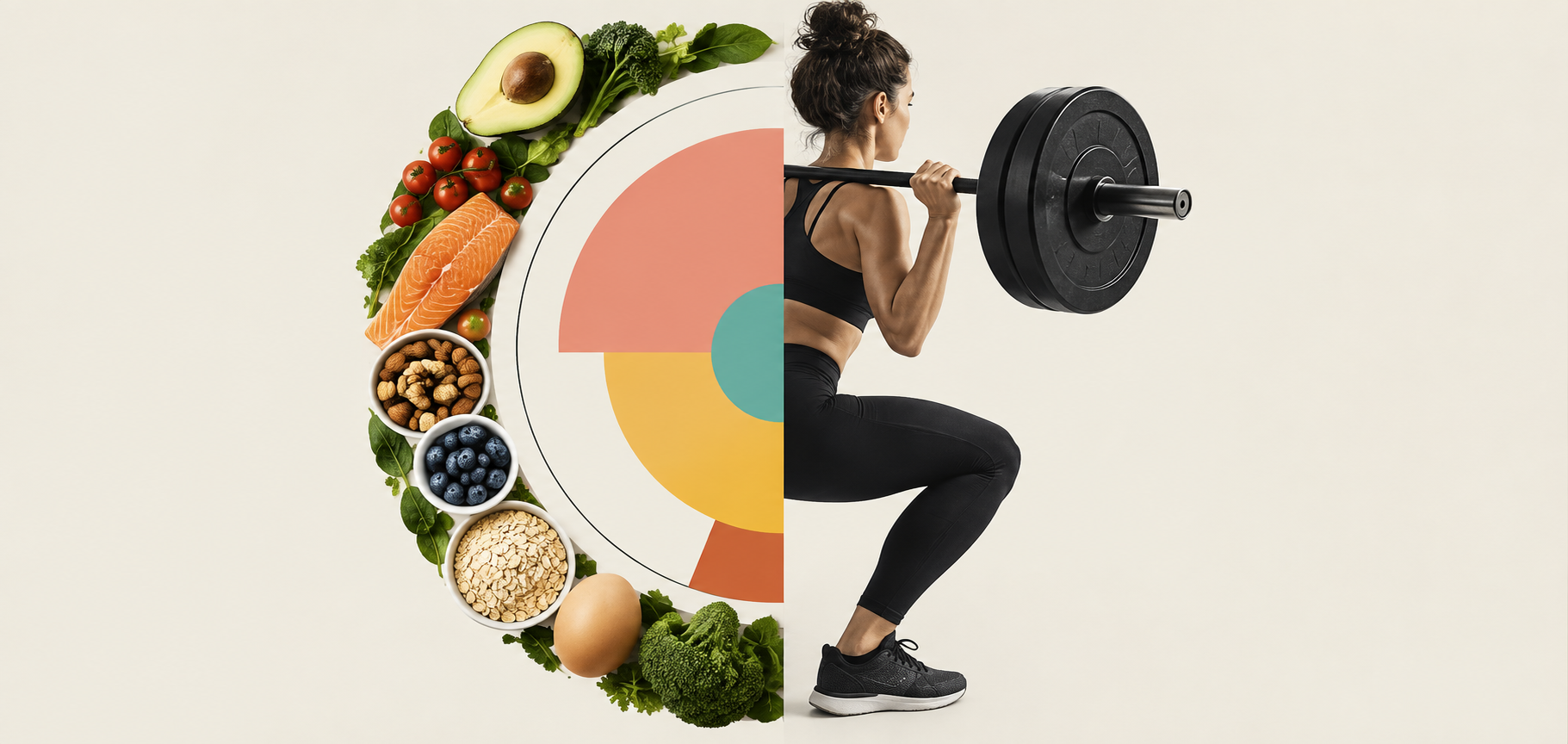
Understanding that your cellular engine isn't broken is remarkably liberating. It means you aren't fighting a losing biological battle against age, you're simply managing variables that have shifted alongside your lifestyle, career, and daily responsibilities.
When we look at baseline health and longevity, the American College of Sports Medicine (ACSM) provides clear, evidence-based targets: at least 150 to 300 minutes of moderate aerobic activity and at least 2 days of resistance training per week.
While these guidelines form a strong foundation, keeping your Total Daily Energy Expenditure elevated and preserving high-performing muscle mass requires a bit more intention. To protect your metabolic baseline across the decades, structure your routine around these three high-leverage pillars:
Prioritize Progressive Resistance Training: Hit or exceed those ACSM strength guidelines by aiming for 2 to 4 structured lifting sessions per week. Focus on progressive overload to signal your body to retain and build metabolically active lean tissue.
Protect Your Daily Background Movement (NEAT): Don't let a hard 45-minute gym session fool you into sitting still for the remaining 15 hours of your day. Track daily steps, take short walking calls, or add 10-minute post-meal walks to keep background energy expenditure high.
Anchor Your Nutrition with Protein: Adequate amino acid intake supports the muscle recovery and growth required by your resistance training, while maximizing the thermic effect of food (TEF).
How We Help at Summit Physio
Meeting these targets sounds straightforward on paper, but real life (joint pain, old injuries, busy schedules, or plateaued progress) frequently gets in the way.
That is precisely where performance physical therapy comes in. At Summit Physio, we don't just treat symptoms or tell you to rest when something hurts. We look at your movement patterns, load tolerance, and overall training structure to keep you lifting, moving, and training at high capacity without running into injury roadblocks. Whether you need to rebuild capacity after an injury, optimize your movement mechanics, or safely scale up your resistance training to build muscle, performance PT bridges the gap between rehabilitation and lifelong physical performance.
The Bottom Line
Your metabolism in your 30s, 40s, and 50s isn't a shadow of what it was in your 20s. Your cellular machinery is firing with the exact same baseline efficiency it always has. By recognizing how life shifts affect your muscle mass and daily background movement, you can make targeted, intentional choices that keep you moving, feeling, and performing at your absolute best at any age.
Dr. Cat Cui, PT, DPT
FAQs
1. Does your metabolism slow down as you get older?
Not necessarily. Research published in 2021 found that, when adjusted for body size and fat-free mass, metabolic rate remains relatively stable from about ages 20 to 60. A measurable age-related decline begins later in adulthood, around age 60.
2. Why does it feel harder to maintain my weight or body composition as I age?
Changes in body composition and daily activity may play a larger role than a dramatically slower metabolism. Losing muscle mass can reduce overall energy expenditure, while changes in lifestyle can decrease NEAT (non-exercise activity thermogenesis)—the calories you burn through everyday movement like walking, standing, and doing chores.
3. Can you maintain a healthy metabolism as you age?
Yes. While some biological changes are part of aging, you can influence several factors that contribute to daily energy expenditure. Regular resistance training, adequate protein intake, and maintaining daily movement can help preserve muscle mass and support an active lifestyle throughout adulthood.
References
Pontzer H, Yamada Y, Sagayama H, et al. Daily energy expenditure through the human life course. Science. 2021;373(6556):808-812. doi:10.1126/science.abe5017
Bull FC, Al-Ansari SS, Biddle S, et al. World Health Organization 2020 guidelines on physical activity and sedentary behaviour. Br J Sports Med. 2020;54(24):1451-1462. doi:10.1136/bjsports-2020-102955