
Urinary Incontinence During Exercise? Here's Why It Happens And Why You Don't Have to Live With It
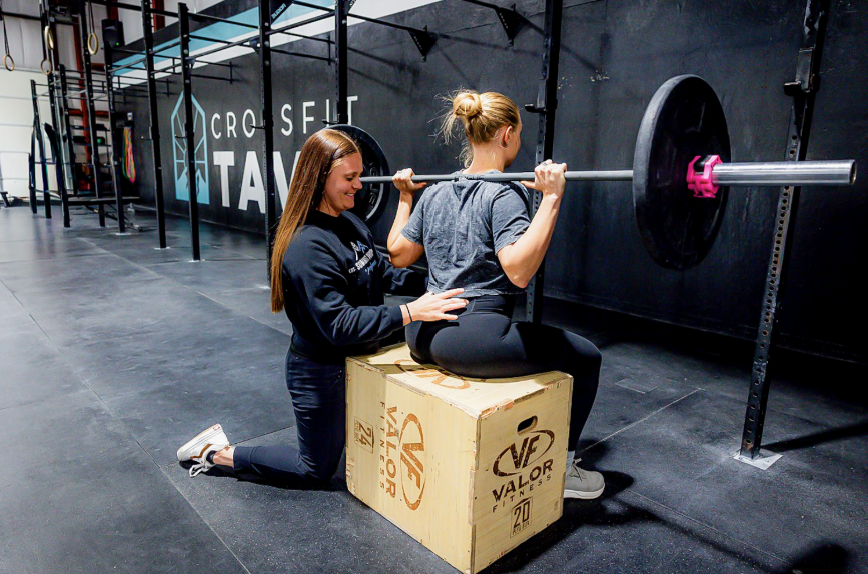
Have you ever leaked urine while running, jumping, lifting weights, or even during a hard workout? Maybe it only happens during double unders at CrossFit, the last few miles of a run, or when you hit a heavy squat. Or perhaps you've noticed leaking when you cough, sneeze, laugh, or lift something heavy around the house. If so, you're not alone.
Urinary incontinence affects millions of people, including athletes of all ages and fitness levels. While it's often thought of as something that only happens after pregnancy or with aging, research tells us that urinary leakage is common even in young, healthy, high-performing athletes. The important thing to know is this: urinary leakage is common, but it is not normal, and it is treatable.
As pelvic floor physical therapists, our goal is to help you understand why leakage is happening and develop a plan that allows you to move, exercise, and compete confidently again.
Understanding Urinary Incontinence
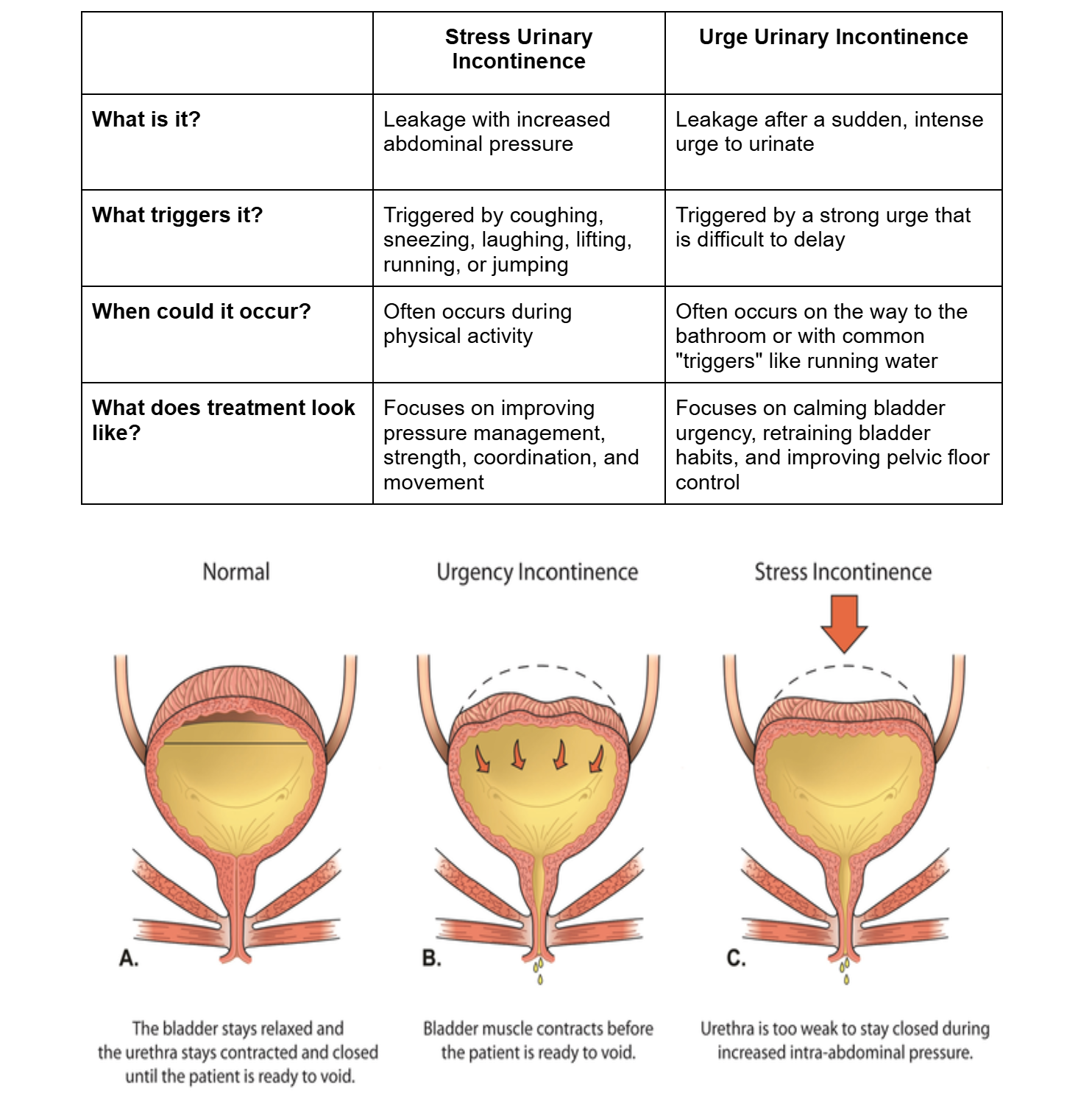
Urinary incontinence simply means the involuntary leakage of urine. There are several different types, but the two most common we see in individuals are stress urinary incontinence and urge urinary incontinence.
Stress Urinary Incontinence
For this blog, we are going to dive further into stress urinary incontinence (SUI) and a subtype of SUI, being athletic urinary incontinence (AUI) SUI occurs when pressure inside the abdomen becomes greater than the support provided by the pelvic floor muscles and surrounding tissues. Despite its name, stress refers to physical stress on the bladder (not emotional stress). Every time you move, cough, laugh, or lift something, your body naturally creates pressure within your abdomen. Normally, your pelvic floor responds automatically by contracting just enough to support your bladder and keep the urethra closed. When that system isn't working as efficiently as it should, urine leakage can occur.
Many people notice stress urinary incontinence during everyday activities such as:
Coughing
Sneezing
Laughing
Standing up from a chair
Rolling over in bed
Carrying groceries
Lifting children
Climbing stairs
Walking downhill
Getting out of the car
For some people, leakage is only a few drops. For others, it may be more significant. Although stress urinary incontinence is commonly associated with pregnancy and childbirth, it can affect women who have never been pregnant, men after prostate surgery, and active individuals of all ages.
Athletic Urinary Incontinence: When Exercise Brings on Leakage
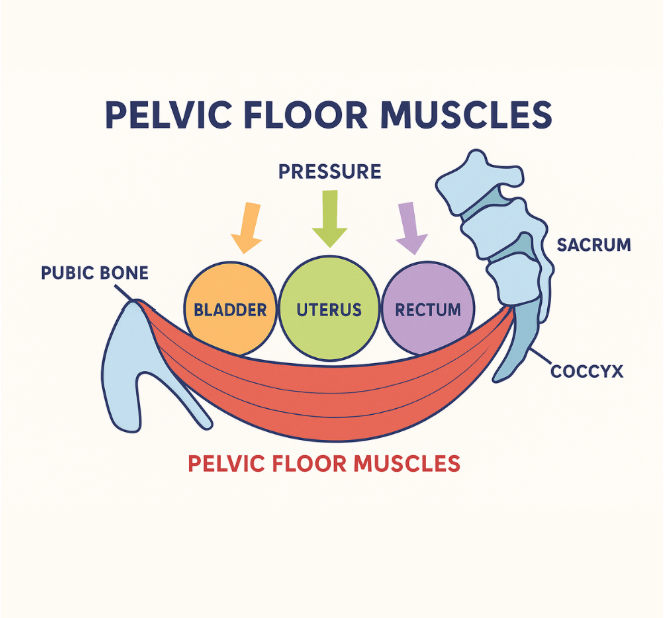
Some athletes only leak during one specific movement, such as double unders or heavy back squats, while others notice symptoms only toward the end of a long run or during high-volume workouts. This doesn't necessarily mean your pelvic floor is weak. It often means the demands of that activity exceed your body's current ability to manage pressure and coordinate movement. If this sounds familiar, you're certainly not alone.
Why Does It Happen?
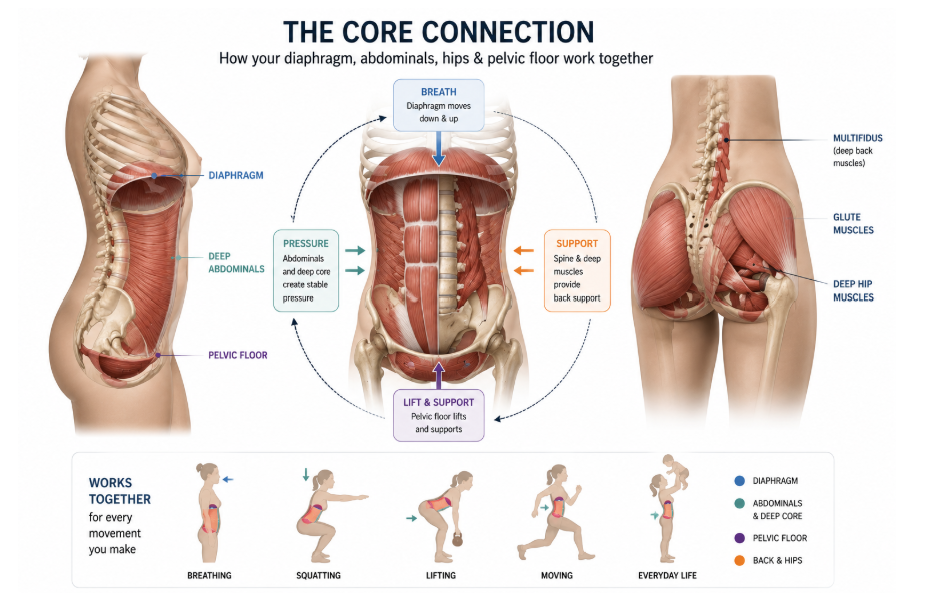
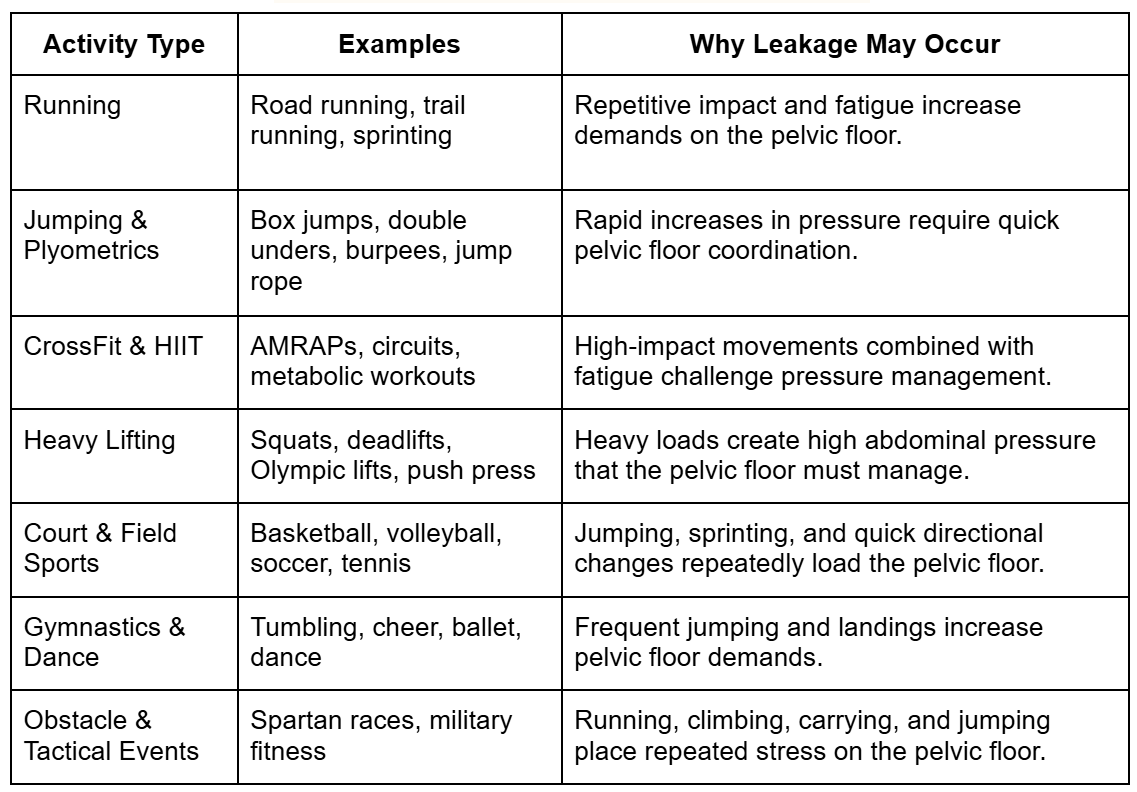
One of the biggest misconceptions about urinary leakage is that it automatically means your pelvic floor is "weak." The reality is much more complex.
Your pelvic floor is part of an entire movement system. It works together with your:
Diaphragm
Deep abdominal muscles
Spine
Hips
Glutes
Breathing mechanics
Every jump, landing, sprint, lift, or change in direction creates rapid increases in pressure throughout your abdomen.
Your pelvic floor has to:
Contract quickly before impact
Relax between movements
Coordinate with breathing
Respond automatically to changing loads
Maintain endurance throughout activity
Sometimes muscles need to become stronger. Sometimes they're actually too tense and don't relax well. Sometimes the issue isn't strength at all, it's timing, coordination, breathing mechanics, movement strategy, or training load.
Think of your pelvic floor like the suspension system on your car.
If the suspension is too loose, it doesn't support you well.
If it's too stiff, it also doesn't function properly.
The goal isn't maximum tightness. The goal is optimal coordination, strength, and adaptability.
The Biggest Myth: "Just Do Kegels"

One of the most common pieces of advice people receive is:
"Just do more Kegels."
While pelvic floor strengthening is helpful for some individuals, it is not the solution for everyone. In fact, doing endless Kegels without understanding the underlying cause may actually make symptoms worse for some people.
Some individuals need to learn how to:
Relax their pelvic floor
Coordinate breathing with movement
Improve pressure management
Increase hip strength
Improve trunk stability
Modify movement mechanics
Progress impact activities appropriately
This is why every treatment plan should be individualized.
What Happens During Pelvic Floor Physical Therapy?
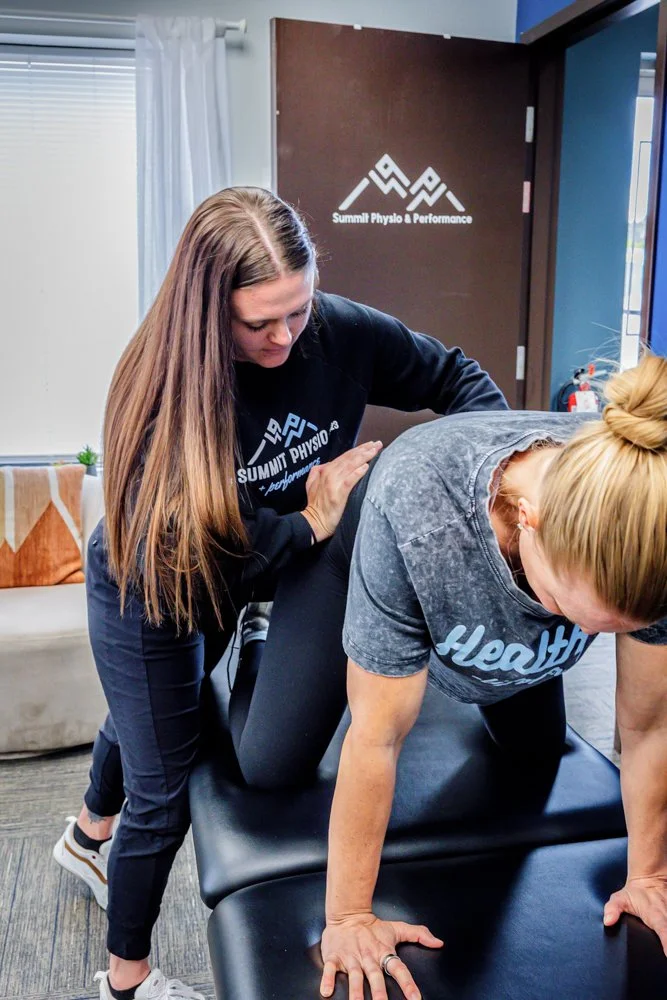
Pelvic floor physical therapy is about much more than pelvic floor exercises.
Your evaluation may include assessing:
Breathing mechanics
Core coordination
Hip strength
Single-leg stability
Squat and lifting technique
Mobility
Balance
Functional movement patterns
Bladder habits
Lifestyle factors
An internal pelvic floor examination may be recommended when appropriate, but it is always performed only with your consent and is not necessary for every patient. Our goal is to understand why your symptoms are occurring to resolve the issue, not simply treat the symptom itself.
.
What Treatment May Include
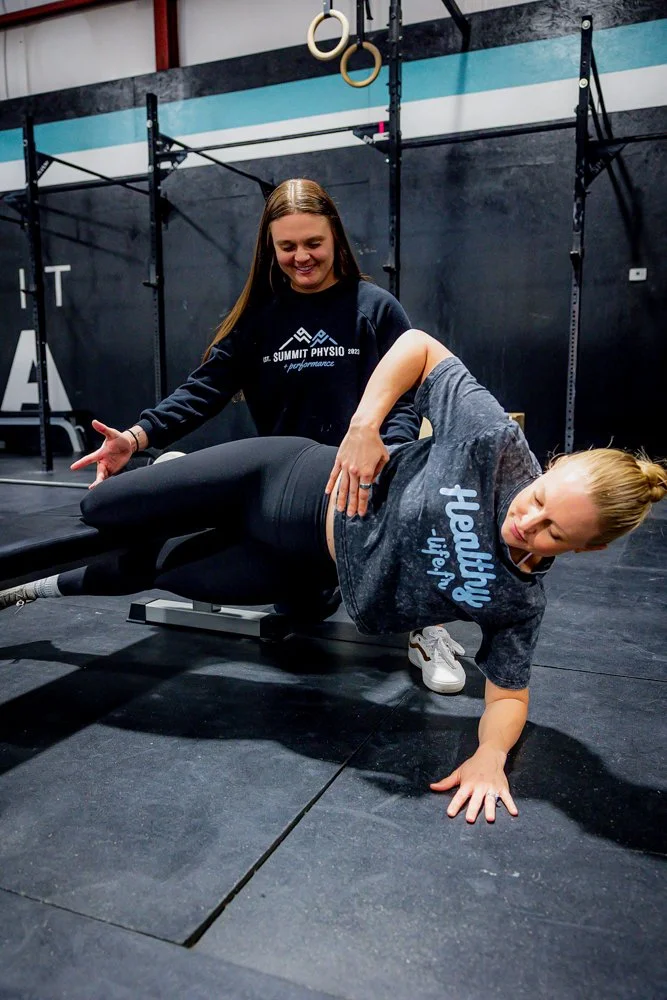
Your rehabilitation plan is individualized based on your goals, symptoms, activity levels, and movement patterns.
Treatment may include:
Pelvic floor muscle training
Breathing retraining
Core and hip strengthening
Pressure management strategies
Bladder retraining
Running or lifting modifications
Gradual return-to-impact programming
Rather than telling you to stop exercising, we want to help you continue doing what you love while addressing the underlying contributors to your symptoms.
Tips You Can Start Today
While every person is different, these habits often help support bladder health:
Stay hydrated
Many people drink less water because they're afraid of leaking.
Ironically, concentrated urine can irritate the bladder and make symptoms worse.
Don't go "just in case"
Frequently emptying your bladder before it's truly full can increase bladder sensitivity and urgency over time.
Address constipation
Constipation increases pressure on the pelvic floor and can contribute to urinary symptoms.
Healthy bowel habits are an important part of pelvic floor health.
Breathe during lifting
Holding your breath throughout lifting can significantly increase pressure within the abdomen.
Learning to coordinate breathing with movement often improves pressure management during exercise.
Keep moving
Avoiding exercise isn't the answer.
Exercise has tremendous benefits for your health, and with the right guidance, most people can continue participating in the activities they love while improving their symptoms.
When Should You See a Pelvic Floor Physical Therapist?
You don't have to wait until symptoms become severe.
Consider scheduling an evaluation if you:
Leak during workouts or sports
Leak when coughing or sneezing
Experience sudden urinary urgency
Wear pads during exercise
Avoid activities because you're worried about leaking
Feel pelvic heaviness or pressure
Notice symptoms affecting your confidence or quality of life
Early treatment often leads to better outcomes and can help prevent symptoms from becoming more limiting over time.
You Deserve to Move with Confidence
Leaking during exercise has become so normalized that many people assume it's simply part of being active. It isn't. Whether your goal is to run a marathon, compete in CrossFit, hike Colorado's fourteeners, chase your kids around the backyard, or simply exercise without worrying about leakage, pelvic floor physical therapy can help.
At our clinic, we believe movement is medicine. Our job isn't just to stop the leaking, it's to help you understand your body, restore confidence, and get back to doing the activities you love without fear. You shouldn't have to plan your workout around the nearest bathroom or avoid exercises because you're worried about leaking. If you're experiencing urinary incontinence (stress or urge incontinence), know that you're not alone, and more importantly, know that help is available.
FAQ
Is it normal to leak urine during exercise, even if I'm young and healthy?
No, it is not normal. While leaking is common among athletes, it is not something you have to accept. It is a sign your body is struggling to manage pressure during exercise, but it is treatable, you don’t have to "live with it" or stop being active.
Why haven't Kegels fixed my leakage?
"Just doing more Kegels" is a common myth. The pelvic floor is part of a complex system involving your diaphragm, core, and hips. If your issue is coordination, tension, or breathing mechanics, Kegels won't fix it and can sometimes make things worse. We identify the root cause to create a plan that works for your specific movement patterns.
What should I expect during a pelvic floor physical therapy evaluation?
We focus on how your entire body moves. We assess your breathing, core coordination, hip strength, and lifting mechanics. While an internal exam can provide extra detail, it is only performed with your full consent and is not required for every patient. Our goal is to understand your movement to get you back to your sport with confidence.
References
Bø K, Nygaard IE. Is Physical Activity Good or Bad for the Female Pelvic Floor? A Narrative Review. Sports Medicine. 2020;50(3):471-484.
Bø K, Lillegård RH, Skaug KL. Pelvic Floor Muscle Training on Stress Urinary Incontinence in Power- and Weightlifters: A Pilot Study. International Urogynecology Journal. 2024. Excellent if your audience includes CrossFit athletes and lifters.
Bø K, et al. Prevalence of Urinary Incontinence in High-Impact Sport Athletes: A Systematic Review and Meta-analysis. International Journal of Environmental Research and Public Health. 2020.
Demeco A, Bartocci G, Astore N, et al. The Efficacy of Pelvic Floor Rehabilitation in the Treatment of Urinary Incontinence in Female Athletes: A Systematic Review. Sports. 2024;12(12):338. doi:10.3390/sports12120338. This is currently one of the best recent reviews specifically focused on athletes.
Syeda F, Pandit U. Urinary Incontinence in Female Athletes: A Systematic Review on Prevalence and Physical Therapy Approaches. Cureus. 2024;16(7):e64544. Reviews prevalence across sports and summarizes physical therapy interventions.
International Continence Society (ICS). Incontinence: 7th International Consultation on Incontinence. 2025/2026 Edition. This is considered one of the gold-standard international references for diagnosis and management of urinary incontinence.
National Institute for Health and Care Excellence (NICE). Urinary Incontinence and Pelvic Organ Prolapse in Women: Management (NG123). Updated guideline.
American Urological Association (AUA). Guideline for the Surgical and Non-Surgical Management of Female Stress Urinary Incontinence.
American Physical Therapy Association (APTA) Academy of Pelvic Health Physical Therapy. Clinical practice resources and patient education.
Institute of Clinical Excellence (ICE). Pelvic Health Certification Curriculum. Movement-based evaluation and rehabilitation principles.